
Buying guides
Waterproof Bags (Dry Bags) Explained: How to Choose
Everything that actually matters when choosing a waterproof bag — closure, seams, size and straps — without the marketing noise.
By the Rihla team · · 3 min read
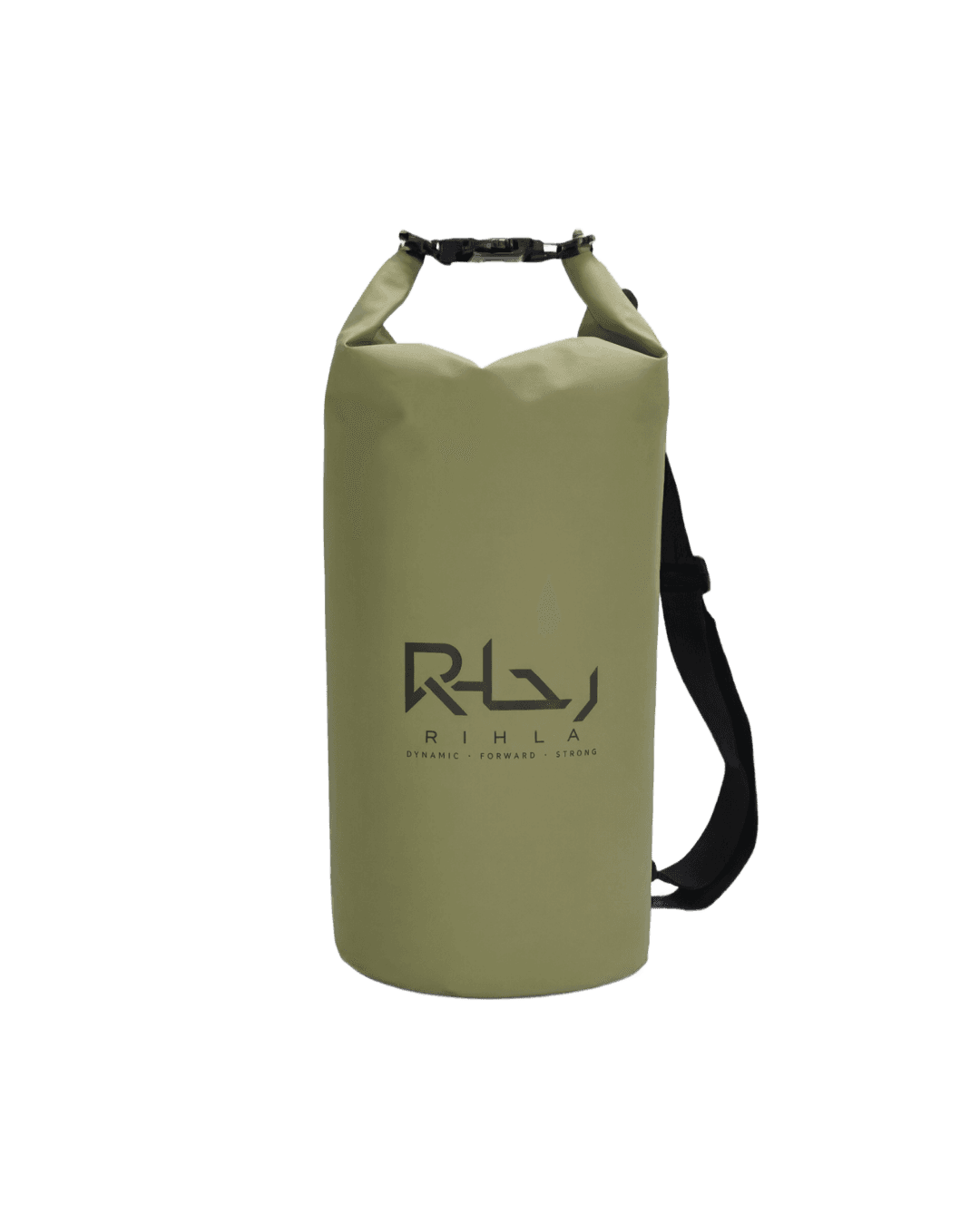
A waterproof bag keeps its contents dry when the outside gets wet — from a rain shower on a hike to a wave over the side of a boat. In practice, most people searching for a "waterproof bag" want what outdoor shops call a dry bag: a bag with a roll-top closure that you fold down and clip shut. The two terms mostly mean the same thing.
This guide explains how these bags work, what separates a good one from a bad one, and how to pick the right size and style for how you actually use it — whether that's the beach, a hike, a boat trip or a motorcycle.
How a waterproof bag actually keeps water out
Three things decide whether a bag is genuinely waterproof: the fabric, the seams and the closure. A bag is only as waterproof as its weakest point, and that is almost never the fabric.
The three closure types
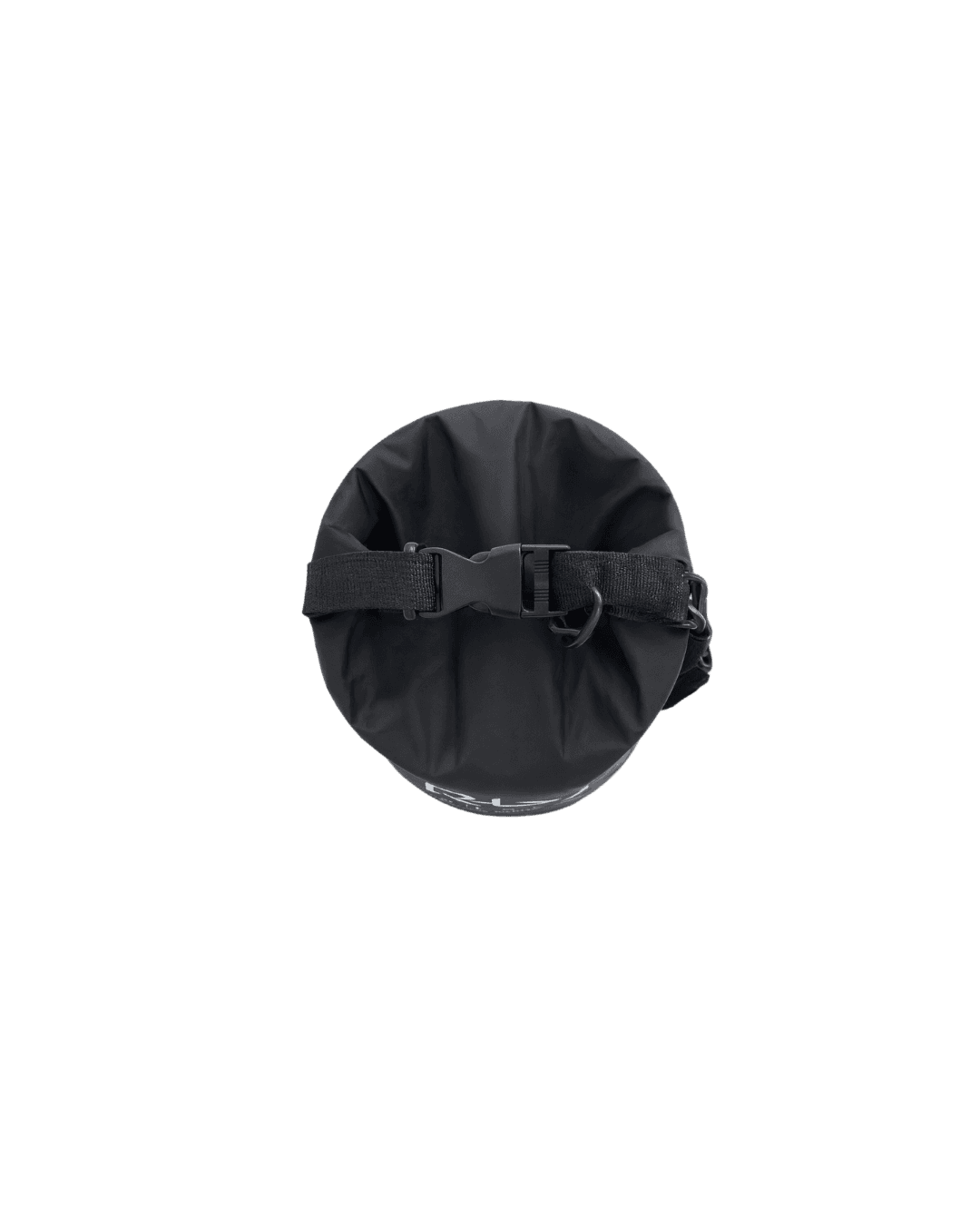
- Roll-top (dry bag). You fold the open end over on itself several times and clip the ends together. No zip, no teeth, nothing to leak — the folds create a long, tight barrier. This is the most reliable closure for rain, spray and brief dunks, and the one we recommend. See how to close a roll-top bag properly.
- Waterproof zip. A sealed, rubberised zip. It's quick to open and good for things you reach into often, but it is the first part to wear out, and it needs to be kept clean and lubricated.
- Standard zip with a water-resistant coating. Fine for drizzle. Not something to trust with a phone in a downpour — see waterproof vs water-resistant.
Seams and materials
Needle holes are tiny doorways for water, so stitched seams are the classic weak point. Better waterproof bags use welded or taped seams: the panels are fused together with heat or covered with waterproof tape, so there are no stitch holes at all. The fabric itself is usually a coated or laminated material — common choices are PVC-coated fabric, TPU-laminated fabric and coated nylon or polyester. Each trades off weight, toughness and cost; a thicker material resists scuffs and sun better, a thinner one packs smaller.
Which size do you need?
Dry-bag sizes are quoted in litres. As a rough guide: 5 litres holds a phone, wallet, keys and a small first-aid kit; 10–15 litres holds a change of clothes or a jacket; 20 litres and up is for overnight gear. Remember that you lose some usable volume when you roll the top down. Our full size guide for 5L vs 15L bags goes into detail.
| Size | Good for | Typical contents |
|---|---|---|
| 5L | Day trips, beach, boat, scooter | Phone, wallet, keys, small first-aid kit |
| 10–15L | Hikes, kayaking, overnight essentials | Spare layer, towel, snacks, camera |
| 20L+ | Camping, multi-day trips | Sleeping bag, clothes, food |
Features worth paying for
- A detachable shoulder strap — turns the bag into a waterproof shoulder bag. More in our waterproof shoulder bag guide.
- D-rings or attachment points — to clip the bag to a kayak, boat or backpack, or to strap it to a motorcycle.
- A reinforced base — stops the bag wearing through where it touches rocks, decks and wet ground.
- A buckle you can use one-handed — wet, cold hands are clumsy.
- Honest instructions — a seller who tells you how many times to roll the top is a seller who tests their product.
Where the Rihla bags fit
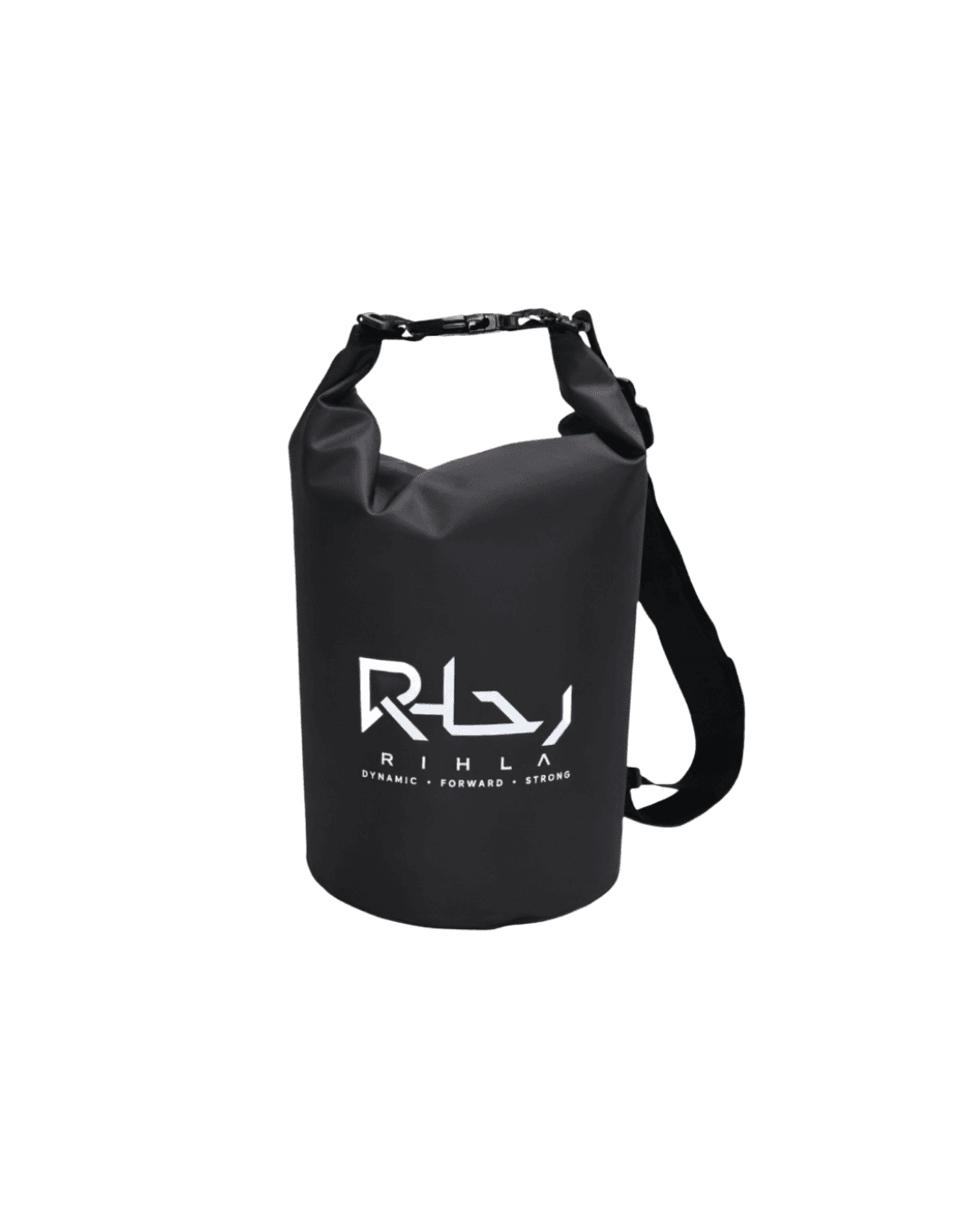
Rihla makes two roll-top waterproof bags: the 5L in black for day essentials and the 15L in olive for overnight loads. Both have a buckle-clip roll-top closure, a reinforced base and a detachable shoulder sling with dual buckles. They're built around Lebanon's use cases — the coast, the mountains and the road — and you pay on delivery, anywhere in the country.
Frequently asked questions
Is a dry bag the same as a waterproof bag?
In everyday use, yes. A dry bag is a waterproof bag with a roll-top closure. The term "waterproof bag" is broader and can also include bags with waterproof zips, but roll-top dry bags are the most dependable design.
Can I fully submerge a roll-top waterproof bag?
A correctly rolled bag with sound seams will normally handle brief dunks, but submersion is the hardest test and depends on the individual bag. Roll the top at least three times, clip it shut and test it with something harmless inside before trusting it with a phone.
Do waterproof bags float?
A bag with air trapped inside usually floats, but it isn't guaranteed — heavy contents will sink it. Don't treat a dry bag as a flotation device.
How many times should I roll the top?
At least three times, then clip the buckle. More rolls make a tighter seal as long as the bag isn't overfilled.
Keep reading
Buying guides
What Size Waterproof Bag Do You Need? 5L vs 15L Guide
What actually fits in a 5L and a 15L waterproof bag — and how to choose between them.
· 2 min read
How-to
How to Close a Roll-Top Dry Bag (How Many Rolls?)
Most dry-bag leaks are user error. Here's the simple method — and why three rolls is the minimum.
· 3 min read